Sunday, 15 April 2012

Lamborghini Reventon Name

Name


The Reventón is named for a fighting bull, in line with Lamborghini tradition. The bull, raised by the Don Heriberto Rodríguez family, was best known for killing famed Mexican bullfighter Félix Guzmán in 1943.[9][10] Reventón means "explosion" or "burst" in Spanish, when used as a noun.[11][12] In the vernacular, it is also used to define a very large party or a night in town. In automotive terms, it means "blowout, flat tire" when used as a noun.[13] When it was used as the name of a bull, however, it was intended to be interpreted as an adjective, a quality or property of that bull in particular. In this last sense, Reventón means "he who seems to be about to burst".[14]

Lamborghini Reventon

Lamboghini Reventon 


The Lamborghini Reventón (Spanish pronunciation: [reβenˈton]) is a mid-engine sports car that debuted at the 2007 Frankfurt Motor Show. It is the most expensive Lamborghini road car to date, costing two million dollars (~US$1.5 million, or ~£840,000).[1] Its top recorded speed was recorded in Dubai, UAE at 356 kilometres per hour (221.2 mph). The official press release stated that only 20 vehicles would be sold to the public,[2] with one additional car (marked as 0/20) produced for the Lamborghini Museum.[3] Although early rumors indicated the total number would actually be 100,[2][4][5] each Reventón is clearly stamped with its number in the sequence of 20 between the driver's and passenger's seats.

Despite the exterior being new,[2] almost all the mechanical elements (including the engine) are sourced directly from the Murciélago LP640.[6] According to the official press release, the Reventón exterior styling was inspired by "the fastest airplanes".[7] To emphasize this, Lamborghini staged a race between a Reventón and a Panavia Tornado fighter plane on a 3 kilometres (1.9 mi) long runway. The Reventón was in the lead for most of the race, but the Tornado caught up "in the last few feet" of the race.[8]

Lamborghini Reventon

The Lamborghini Reventón (Spanish pronunciation: [reβenˈton]) is a mid-engine sports car that debuted at the 2007 Frankfurt Motor Show. It is the most expensive Lamborghini road car to date, costing two million dollars (~US$1.5 million, or ~£840,000).[1] Its top recorded speed was recorded in Dubai, UAE at 356 kilometres per hour (221.2 mph). The official press release stated that only 20 vehicles would be sold to the public,[2] with one additional car (marked as 0/20) produced for the Lamborghini Museum.[3] Although early rumors indicated the total number would actually be 100,[2][4][5] each Reventón is clearly stamped with its number in the sequence of 20 between the driver's and passenger's seats.

Despite the exterior being new,[2] almost all the mechanical elements (including the engine) are sourced directly from the Murciélago LP640.[6] According to the official press release, the Reventón exterior styling was inspired by "the fastest airplanes".[7] To emphasize this, Lamborghini staged a race between a Reventón and a Panavia Tornado fighter plane on a 3 kilometres (1.9 mi) long runway. The Reventón was in the lead for most of the race, but the Tornado caught up "in the last few feet" of the race.

Thursday, 1 December 2011


Awards


The 1965 Mustang won the Tiffany Gold Medal for excellence in American design, the first automobile ever to do so.

The Mustang was on the Car and Driver Ten Best list in 1983, 1987, 1988, 2005, 2006, and 2011. It won the Motor Trend Car of the Year award in 1974 and 1994.

In 2005 it was runner-up to the Chrysler 300 for the North American Car of the Year award and was named Canadian Car of the Year.[54]

Wednesday, 30 November 2011

Ford Mustang


The Ford Mustang is an automobile manufactured by the Ford Motor Company. It was initially based on the second generation North American Ford Falcon, a compact car.[1] Introduced early on April 17, 1964,[2] dubbed as a "1964½" model by Mustang fans, the 1965 Mustang was the automaker's most successful launch since the Model A.[3] The model is Ford's third oldest nameplate in production[citation needed] and has undergone several transformations to its current fifth generation.

The Mustang created the "pony car" class of American automobiles—sports car-like coupes with long hoods and short rear decks[4]—and gave rise to competitors such as GM's Chevrolet Camaro,[5] AMC's Javelin,[6] and Chrysler's revamped Plymouth Barracudas and Dodge Challengers.[7] It also inspired coupés such as the Toyota Celica and Ford Capri, which were exported to the United States.

Friday, 25 November 2011


Colour


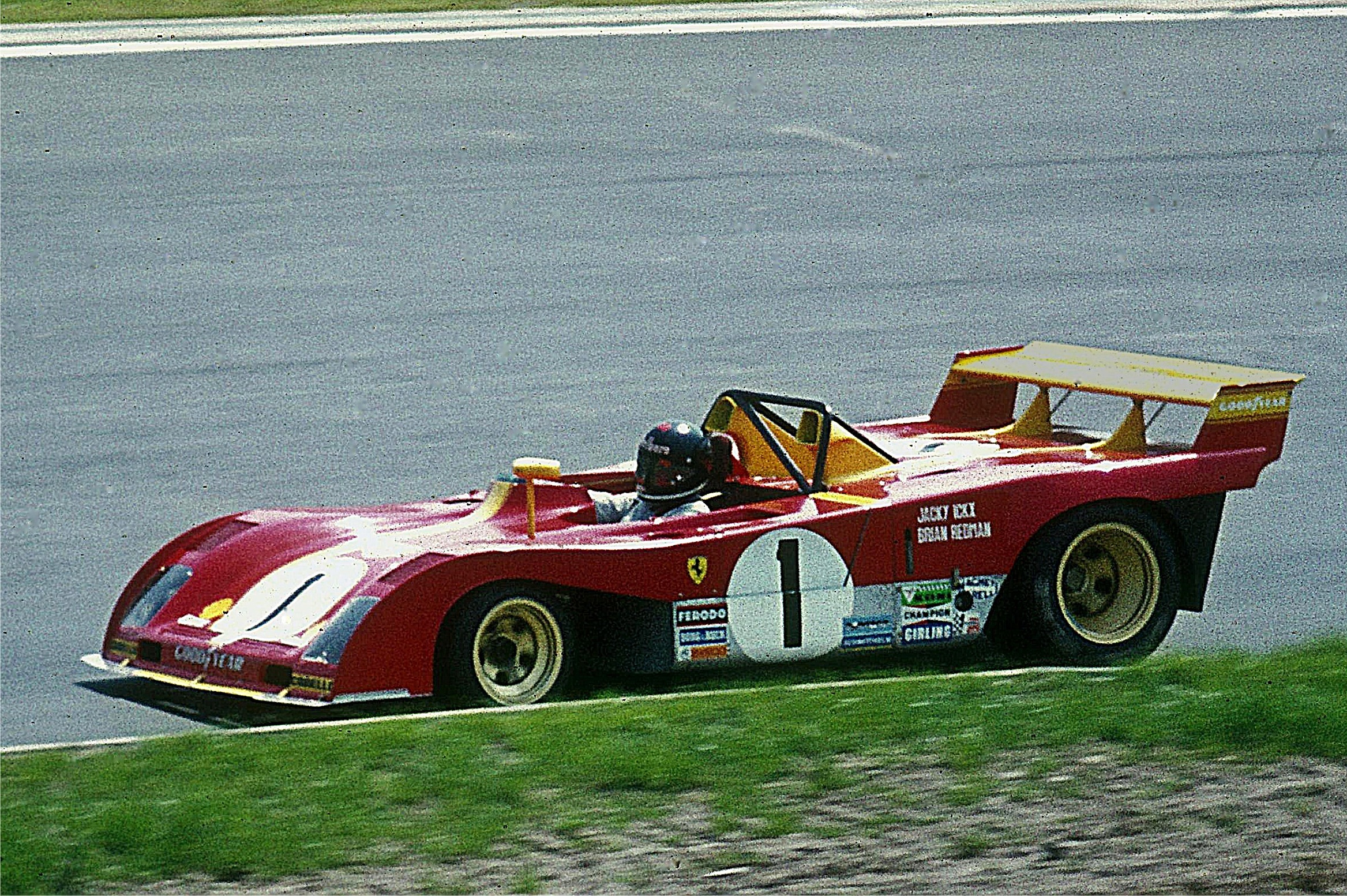
Since the 1920s, Italian race cars of Alfa Romeo, Maserati and later Ferrari and Abarth were (and often still are) painted in "race red" (Rosso Corsa). This was the customary national racing color of Italy, as recommended between the World Wars by the organizations that later would become the FIA. It refers to the nationality of the competing team, not that of the car manufacturer or driver. In that scheme, French-entered cars like Bugatti were blue, German like Benz and Mercedes white (since 1934 also bare sheet metal silver), and British green such as the mid-1960s Lotus and BRM, for instance.

Curiously, Ferrari won the 1964 World championship with John Surtees by competing the last two races in North America with cars painted in the US-American race colors white and blue, as these were not entered by the Italian factory themselves, but by the U.S.-based North American Racing Team (NART) team. This was done as a protest concerning arguments between Ferrari and the Italian Racing Authorities regarding the homologation of a new mid-engined Ferrari race car.

Saturday, 19 November 2011


Identity


The famous symbol of the Ferrari race team is the Cavallino Rampante ("prancing horse") black prancing stallion on a yellow shield, usually with the letters S F (for Scuderia Ferrari), with three stripes of green, white and red (the Italian national colors) at the top. The road cars have a rectangular badge on the hood (see picture at top of page), and, optionally, the shield-shaped race logo on the sides of both front wings, close to the door.

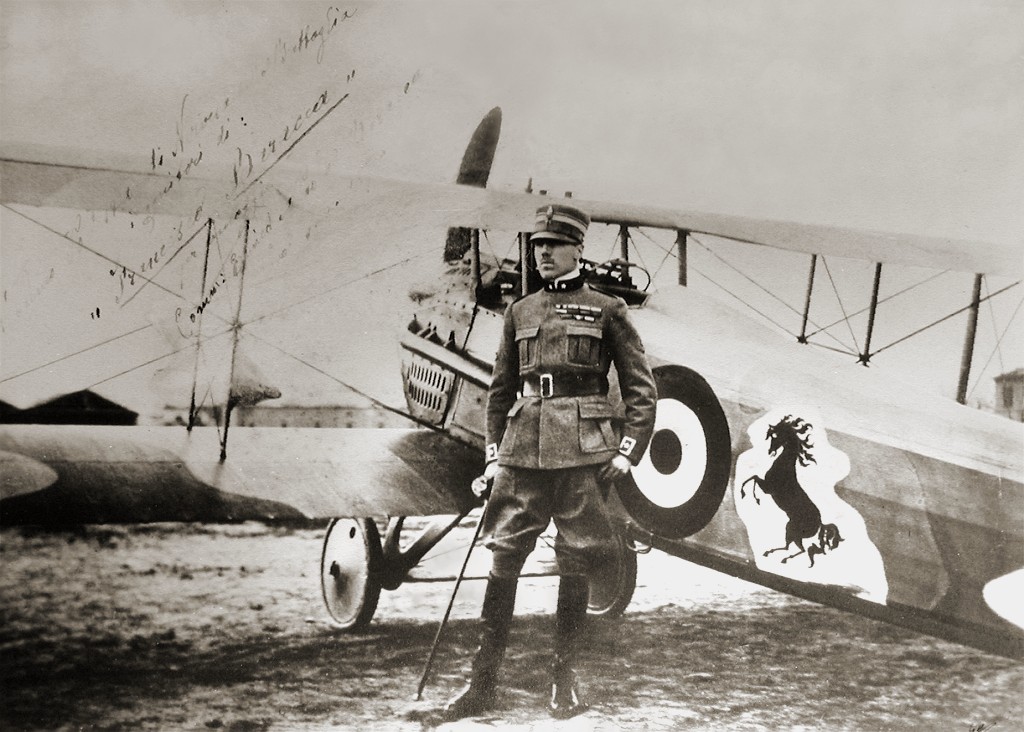
On 17 June 1923, Enzo Ferrari won a race at the Savio track in Ravenna where he met the Countess Paolina, mother of Count Francesco Baracca, an ace of the Italian air force and national hero of World War I, who used to paint a horse on the side of his planes. The Countess asked Enzo to use this horse on his cars, suggesting that it would bring him good luck. The original "prancing horse" on Baracca's airplane was painted in red on a white cloud-like shape, but Ferrari chose to have the horse in black (as it had been painted as a sign of grief on Baracca's squadron planes after the pilot was killed in action) and he added a canary yellow background as this is the color of the city of Modena, his birthplace. The Ferrari horse was, from the very beginning, markedly different from the Baracca horse in most details, the most noticeable being the tail that in the original Baracca version was pointing downward.

Ferrari has used the cavallino rampante on official company stationery since 1929. Since the Spa 24 Hours of 9 July 1932, the cavallino rampante has been used on Alfa Romeos raced by Scuderia Ferrari.

The motif of a prancing horse is old, it can be found on ancient coins. A similar black horse on a yellow shield is the Coat of Arms of the German city of Stuttgart, home of Mercedes-Benz and the design bureau of Porsche, both being main competitors of Alfa and Ferrari in the 1930s. The city's name derives from Stutengarten, an ancient form of the German word Gestüt, which translates into English as stud farm and into Italian as scuderia. Porsche also includes the Stuttgart sign in its corporate logo, centred in the emblem of the state of Württemberg. Stuttgart's Rössle has both rear legs firmly planted on the soil, like Baracca's horse, but unlike Ferrari's cavallino.

Fabio Taglioni used the cavallino rampante on his Ducati motorbikes, as Taglioni was born at Lugo di Romagna like Baracca, and his father too was a military pilot during WWI (although not part of Baracca's squadron, as is sometimes mistakenly reported). As Ferrari's fame grew, Ducati abandoned the horse- perhaps the result of a private agreement between the two companies.

Austrian Fuel Stations

The cavallino rampante is the visual symbol of Ferrari. Cavallino Magazine uses the name, but not the logo. However, other companies use similar logos: Avanti, an Austrian company operating over 100 filling stations, uses a prancing horse logo which is nearly identical to Ferrari's, as does Iron Horse Bicycles.

Wednesday, 9 November 2011


Concept cars and specials


Ferrari has produced a number of concept cars, such as the Ferrari Mythos. While some of these were quite radical (such as the Ferrari Modulo) and never intended for production, others such as the Ferrari Mythos have shown styling elements which were later incorporated into production models.

The most recent concept car to be produced by Ferrari themselves was the 2010 Ferrari Millechili.

A number of one-off special versions of Ferrari road cars have also been produced, some of which have been commissioned by wealthy owners. One of the examples is the Ferrari P4/5.

The Special Projects program is a collaboration by Ferrari with Italian automobile coachbuilders such as Fioravanti, Pininfarina, and Zagato to build custom cars using selected Ferrari models as a structural base. The first car under this program is the SP1, commissioned by a Japanese business executive. The second is the P540 Superfast Aperta, commissioned by an American enthusiast.

Tuesday, 1 November 2011


Current models


Ferrari's first vehicle was the 125 S sports/racing model. In 1949, the Ferrari 166 Inter, the company's first move into the grand touring market, which continues to make up the bulk of Ferrari sales to the present day.

Several early cars featured bodywork customised by a number of coachbuilders such as Pininfarina, Zagato and Bertone.

The Dino was the first mid-engined Ferrari. This layout would go on to be used in most Ferraris of the 1980s and 1990s. V8 Ferrari models make up well over half of the marque's total production.

For a time, Ferrari built 2+2 versions of its mid-engined V8 cars. Although they looked quite different from their 2-seat counterparts, both the GT4 and Mondial were closely related to the 308 GTB.

The company has also produced front-engined 2+2 cars, culminating in the current 612 Scaglietti and California.

Ferrari entered the mid-engined 12-cylinder fray with the Berlinetta Boxer in 1973. The later Testarossa remains one of the most famous Ferraris.

Thursday, 20 October 2011


Race cars for other teams


Throughout its history, Ferrari has supplied racing cars to other entrants, aside from its own works Scuderia Ferrari team.

In the 1950s and 60s, Ferrari supplied Formula One cars to a number of private entrants and other teams. One famous example was Tony Vandervell's team, which raced the Thinwall Special modified Ferraris before building their own Vanwall cars. The North American Racing Team's entries in the final three rounds of the 1969 season were the last occasions on which a team other than Scuderia Ferrari entered a World Championship Grand Prix with a Ferrari car.[4]

Ferrari supplied cars complete with V8 engines for the A1 Grand Prix series, from the 2008-09 season.[5] The car was designed by Rory Byrne and is styled to resemble the 2004 Ferrari Formula one car.

The 599 GTB Fiorano and F430 GT are used in GT racing series. The Ferrari Challenge is a one make racing series for the Ferrari F430. Ferrari's latest supercar, the 2006 FXX is not road legal, and is therefore only used for track events.

Saturday, 1 October 2011


Scuderia Ferrari


Scuderia Ferrari has participated in a number of classes of motorsport, though it is currently only involved in Formula One. It is the only team to have competed in the Formula One World Championship continuously since its inception in 1950. José Froilán González gave the team its first F1 victory at the 1951 British Grand Prix.

Alberto Ascari gave Ferrari its first Drivers Championship a year later. Ferrari is the oldest team in the championship, and the most successful: the team holds nearly every Formula One record. As of 2008, the team's records include 15 World Drivers Championship titles (1952, 1953, 1956, 1958, 1961, 1964, 1975, 1977, 1979, 2000, 2001, 2002, 2003, 2004 and 2007) 16 World Constructors Championship titles (1961, 1964, 1975, 1976, 1977, 1979, 1982, 1983, 1999, 2000, 2001, 2002, 2003, 2004, 2007 and 2008), 209 Grand Prix victories, 4925.27 points, 622 podium finishes, 203 pole positions, and 218 fastest laps in 776 Grands Prix contested.

Thursday, 22 September 2011


Motorsport


Since the company's beginnings, Ferrari has been involved in motorsport, competing in a range of categories including Formula One and sports car racing through its Scuderia Ferrari sporting division as well as supplying cars and engines to other teams and for one make series.

The 1940 AAC 815 was the first racing car to be designed by Enzo Ferrari, although it was not badged as a Ferrari model.

Saturday, 10 September 2011


History


Enzo Ferrari never intended to produce road cars when he formed Scuderia Ferrari (literally "Ferrari Stable", and usually used to mean "Team Ferrari", it is correctly pronounced [skudeˈriːa]) in 1928 as a sponsor for amateur drivers headquartered in Modena. Ferrari prepared, and successfully raced, various drivers in Alfa Romeo cars until 1938, when he was hired by Alfa Romeo to head their motor racing department.

In 1941, Alfa Romeo was confiscated by the fascist government of Benito Mussolini as part of the Axis Powers' war effort. Enzo Ferrari's division was small enough to be unaffected by this. Because he was prohibited by contract from racing for four years, the Scuderia briefly became Auto Avio Costruzioni Ferrari, which ostensibly produced machine tools and aircraft accessories. Also known as SEFAC (Scuderia Enzo Ferrari Auto Corse), Ferrari did in fact produce one race car, the Tipo 815, in the non-competition period. It was the first actual Ferrari car (it debuted at the 1940 Mille Miglia), but due to World War II it saw little competition. In 1943 the Ferrari factory moved to Maranello, where it has remained ever since. The factory was bombed by the Allies in 1944 and rebuilt in 1946, after the war ended, and included a works for road car production. Until Il Commendatore's death, this would remain little more than a source of funding for his racing operations.

Thursday, 1 September 2011


Ferrari


Ferrari S.p.A. is an Italian sports car manufacturer based in Maranello, Italy. Founded by Enzo Ferrari in 1929, as Scuderia Ferrari, the company sponsored drivers and manufactured race cars before moving into production of street-legal vehicles as Ferrari S.p.A. in 1947. Throughout its history, the company has been noted for its continued participation in racing, especially in Formula One, where it has had great success. Ferrari road cars are generally seen as a symbol of luxury and wealth.

Speculation regarding production


It was reported on 22 March 2009 that production plans for the Lamborghini Estoque were cancelled.[5] Lamborghini executives responded to this by stating that the Estoque had not reached the production planning stage and that the decision whether to produce the Estoque or not has been delayed due to sales and marketing considerations.[6][7] Stephan Winkelmann, Lamborghini's chairman, has since indicated that a four-door Lamborghini is likely, stating that response to the Estoque showed opportunities for Lamborghini outside the supercar market.[8] However, Winkelmann also stated that Lamborghini does not have any plans to manufacture the Estoque and that it was only a concept vehicle.[9]

Wednesday, 31 August 2011


Lamborghini Estoque


The Lamborghini Estoque (Spanish pronunciation: [esˈtoke]) is a concept car built by Lamborghini. Unlike current production Lamborghini cars, which are mid-engine two-seat sports cars, the Estoque is a four-door sedan.

The Estoque was introduced at the 2008 Paris Motor Show.[1][2][3] The Estoque is the first front-engine vehicle by Lamborghini since the LM002 utility vehicle. It is described as a "concept for a $230,000 four-door sedan".[4] It currently houses a 5.2 litre V10 engine, although there has been speculation that this could be replaced by a V12, V8, or possibly even a hybrid or turbo-diesel engine, as suggested by Lamborghini's Brand Director, Manfred Fitzgerald.[2]

As with other Lamborghinis, the Estoque derives its name from Spanish-style bullfighting. An estoque is a type of sword traditionally used by matadors.[4]

Thursday, 11 August 2011


Aventador J


Six months after unveiling the Aventador, plans for a roadster version were leaked by the U.S. EPA after it included the model on a data sheet on its website. Lamborghini officially unveiled the Aventador J to the world at the 2012 Geneva Motor Show. The roofless and windowless concept car uses the same V12 engine as the standard Aventador, producing 700 hp through a lightweight seven-speed automated transmission. The car has also been stripped of its air conditioning and radio units to save further weight, allowing it to weigh in at only 3,472 pounds (1,575 kg).[20][21] The car at the Geneva show is the only copy to be produced.[22]

The J designation comes from Appendix J in the FIA rulebook that describes the technical specifications of race cars.[22]

Monday, 1 August 2011


Reception


On 31 July 2011, the Aventador was reviewed on motoring show Top Gear, receiving mixed reviews from Richard Hammond. Although impressed with the performance and handling, Hammond expressed dismay at the lack of temperament and danger associated with driving previous Lamborghini supercars.[18] The Aventador recorded the third fastest time around the Top Gear track with a time of 1.16.5, beating the Bugatti Veyron Super Sport, among others. Top Gear also announced that it chose the Aventador as the car of the year for 2011.[19]

The Lamborghini Aventador makes an appearance on video games such as Gran Turismo 5, Forza Motorsport 4 via the November Speed Pack DLC, Car Town and Need for Speed: The Run. It also served as the cover art of the PlayStation Vita game Asphalt: Injection. It has also been confirmed as downloadable content for Gran Turismo 5.

Sunday, 31 July 2011


Engine


The Aventador LP 700-4 uses Lamborghini's new 700 PS (515 kW; 690 bhp) and 425.77 bhp (317 kW; 432 PS) per tonne with the 6.5 liter 60° V12 engine. Known internally as the L539,[3] the new engine is Lamborghini's fourth in-house engine and second V12. It is the first all-new V12 since the 3.5 litre powerplant found in the Miura.[12]Displacement 6,498 cc (396.5 cu in)
Max. power 700 PS (515 kW) @ 8,250 rpm
Max. torque 690 N·m (510 lb·ft) @ 5,500 rpm
CO2 emissions 398 g/km
Combined fuel consumption 17.2 L/100 km (16.4 mpg-imp; 13.7 mpg-US) [13]


Performance is estimated to be 0–100 km/h (62 mph) in 2.9 seconds with a top speed of around 349.2 km/h (217.0 mph).[14] Its United States Environmental Protection Agency fuel mileage is 14 miles per US gallon (17 L/100 km; 17 mpg-imp).[12]

Its transmission, a single-clutch 7-speed semi-automatic, is built by Graziano Trasmissioni.[15][16] Although being single-clutch, gear-shifts are accomplished in 50 milliseconds.

The brand new, electronically controlled, four-wheel drive system is developed and supplied by the Swedish company Haldex Traction, offering superb traction[citation needed] and handling capabilities based on their 4th generation technology[citation needed].[17]

Monday, 25 July 2011

Etymology


Like previous Lamborghinis, the Aventador name was chosen for its symbolic connection to the world of fighting bulls, sharing a name with the legendary Aventador, a trophy-winning bull in the world of Spanish bullfighting. Bred by the sons of Don Celestino Cuadri Vides, the bull that bore the number 32 took part in a notably spirited, bloody and violent battle with a torero in the town of Zaragoza, Spain that earned him the “Trofeo de la Peña La Madroñera" in 1993.[3][9]

Production will be limited to 4000 units (4099 Murciélagos have been built). The moulds used to make the carbon-fibre monocoque are expected to last 500 units each and only 8 have been made.[10] Lamborghini says that the Aventador is two generations ahead of anything else on sale, using Formula One-style suspension and a lightweight carbon fibre monocoque.[11] Stylistically, the Aventador represents an evolution of its predecessor, the Murciélago. The car's shape also borrows heavily from Lamborghini's limited-edition Reventón and their Estoque concept car.