Thursday, 20 October 2011


Race cars for other teams


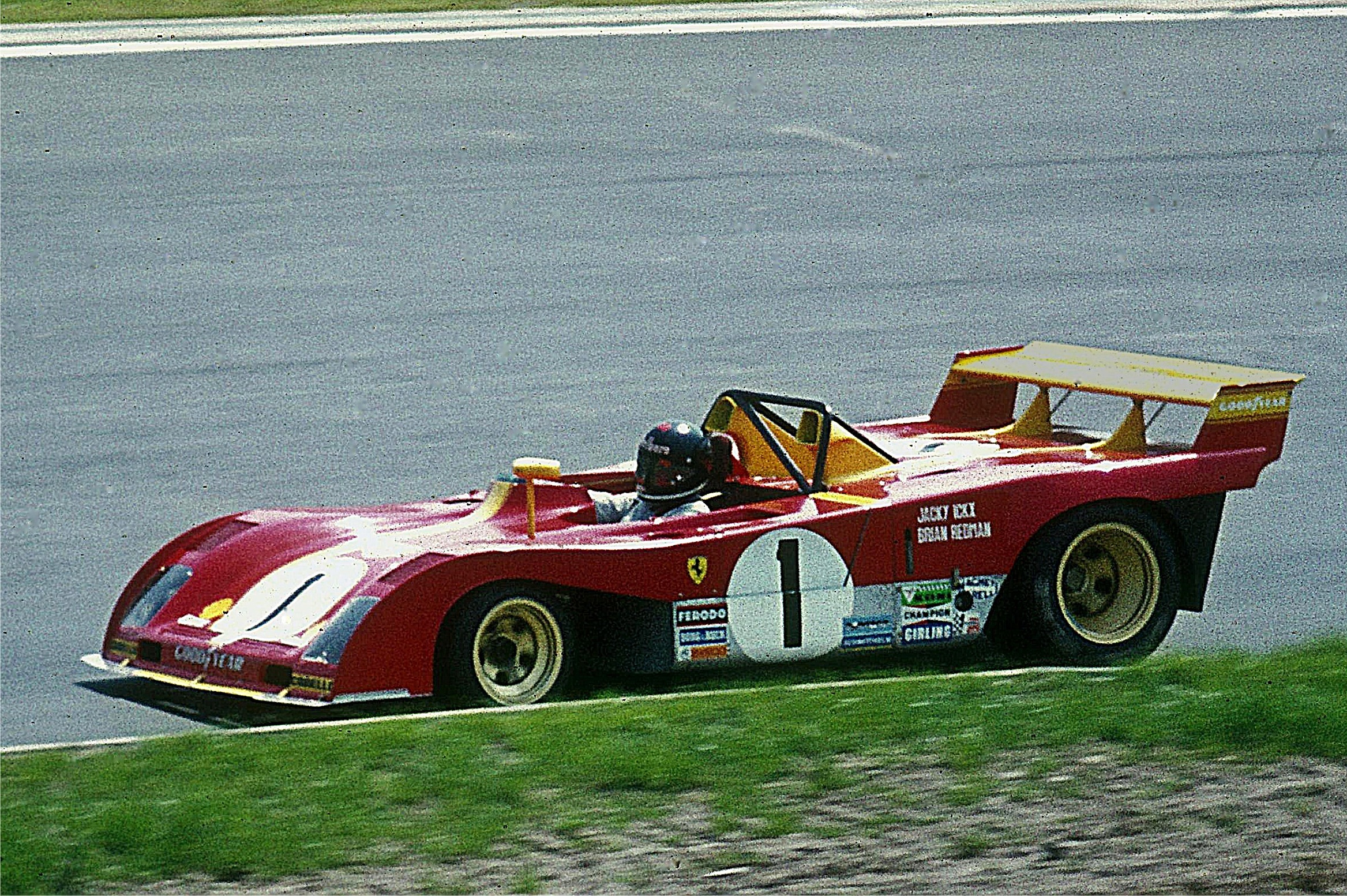
Throughout its history, Ferrari has supplied racing cars to other entrants, aside from its own works Scuderia Ferrari team.

In the 1950s and 60s, Ferrari supplied Formula One cars to a number of private entrants and other teams. One famous example was Tony Vandervell's team, which raced the Thinwall Special modified Ferraris before building their own Vanwall cars. The North American Racing Team's entries in the final three rounds of the 1969 season were the last occasions on which a team other than Scuderia Ferrari entered a World Championship Grand Prix with a Ferrari car.[4]

Ferrari supplied cars complete with V8 engines for the A1 Grand Prix series, from the 2008-09 season.[5] The car was designed by Rory Byrne and is styled to resemble the 2004 Ferrari Formula one car.

The 599 GTB Fiorano and F430 GT are used in GT racing series. The Ferrari Challenge is a one make racing series for the Ferrari F430. Ferrari's latest supercar, the 2006 FXX is not road legal, and is therefore only used for track events.

Saturday, 1 October 2011


Scuderia Ferrari


Scuderia Ferrari has participated in a number of classes of motorsport, though it is currently only involved in Formula One. It is the only team to have competed in the Formula One World Championship continuously since its inception in 1950. José Froilán González gave the team its first F1 victory at the 1951 British Grand Prix.

Alberto Ascari gave Ferrari its first Drivers Championship a year later. Ferrari is the oldest team in the championship, and the most successful: the team holds nearly every Formula One record. As of 2008, the team's records include 15 World Drivers Championship titles (1952, 1953, 1956, 1958, 1961, 1964, 1975, 1977, 1979, 2000, 2001, 2002, 2003, 2004 and 2007) 16 World Constructors Championship titles (1961, 1964, 1975, 1976, 1977, 1979, 1982, 1983, 1999, 2000, 2001, 2002, 2003, 2004, 2007 and 2008), 209 Grand Prix victories, 4925.27 points, 622 podium finishes, 203 pole positions, and 218 fastest laps in 776 Grands Prix contested.

Thursday, 22 September 2011


Motorsport


Since the company's beginnings, Ferrari has been involved in motorsport, competing in a range of categories including Formula One and sports car racing through its Scuderia Ferrari sporting division as well as supplying cars and engines to other teams and for one make series.

The 1940 AAC 815 was the first racing car to be designed by Enzo Ferrari, although it was not badged as a Ferrari model.

Saturday, 10 September 2011


History


Enzo Ferrari never intended to produce road cars when he formed Scuderia Ferrari (literally "Ferrari Stable", and usually used to mean "Team Ferrari", it is correctly pronounced [skudeˈriːa]) in 1928 as a sponsor for amateur drivers headquartered in Modena. Ferrari prepared, and successfully raced, various drivers in Alfa Romeo cars until 1938, when he was hired by Alfa Romeo to head their motor racing department.

In 1941, Alfa Romeo was confiscated by the fascist government of Benito Mussolini as part of the Axis Powers' war effort. Enzo Ferrari's division was small enough to be unaffected by this. Because he was prohibited by contract from racing for four years, the Scuderia briefly became Auto Avio Costruzioni Ferrari, which ostensibly produced machine tools and aircraft accessories. Also known as SEFAC (Scuderia Enzo Ferrari Auto Corse), Ferrari did in fact produce one race car, the Tipo 815, in the non-competition period. It was the first actual Ferrari car (it debuted at the 1940 Mille Miglia), but due to World War II it saw little competition. In 1943 the Ferrari factory moved to Maranello, where it has remained ever since. The factory was bombed by the Allies in 1944 and rebuilt in 1946, after the war ended, and included a works for road car production. Until Il Commendatore's death, this would remain little more than a source of funding for his racing operations.

Thursday, 1 September 2011


Ferrari


Ferrari S.p.A. is an Italian sports car manufacturer based in Maranello, Italy. Founded by Enzo Ferrari in 1929, as Scuderia Ferrari, the company sponsored drivers and manufactured race cars before moving into production of street-legal vehicles as Ferrari S.p.A. in 1947. Throughout its history, the company has been noted for its continued participation in racing, especially in Formula One, where it has had great success. Ferrari road cars are generally seen as a symbol of luxury and wealth.

Speculation regarding production


It was reported on 22 March 2009 that production plans for the Lamborghini Estoque were cancelled.[5] Lamborghini executives responded to this by stating that the Estoque had not reached the production planning stage and that the decision whether to produce the Estoque or not has been delayed due to sales and marketing considerations.[6][7] Stephan Winkelmann, Lamborghini's chairman, has since indicated that a four-door Lamborghini is likely, stating that response to the Estoque showed opportunities for Lamborghini outside the supercar market.[8] However, Winkelmann also stated that Lamborghini does not have any plans to manufacture the Estoque and that it was only a concept vehicle.[9]

Wednesday, 31 August 2011


Lamborghini Estoque


The Lamborghini Estoque (Spanish pronunciation: [esˈtoke]) is a concept car built by Lamborghini. Unlike current production Lamborghini cars, which are mid-engine two-seat sports cars, the Estoque is a four-door sedan.

The Estoque was introduced at the 2008 Paris Motor Show.[1][2][3] The Estoque is the first front-engine vehicle by Lamborghini since the LM002 utility vehicle. It is described as a "concept for a $230,000 four-door sedan".[4] It currently houses a 5.2 litre V10 engine, although there has been speculation that this could be replaced by a V12, V8, or possibly even a hybrid or turbo-diesel engine, as suggested by Lamborghini's Brand Director, Manfred Fitzgerald.[2]

As with other Lamborghinis, the Estoque derives its name from Spanish-style bullfighting. An estoque is a type of sword traditionally used by matadors.[4]